Bathroom Remodeling
Foam Shower Pans vs. Traditional Mortar Beds: Which Is Better?
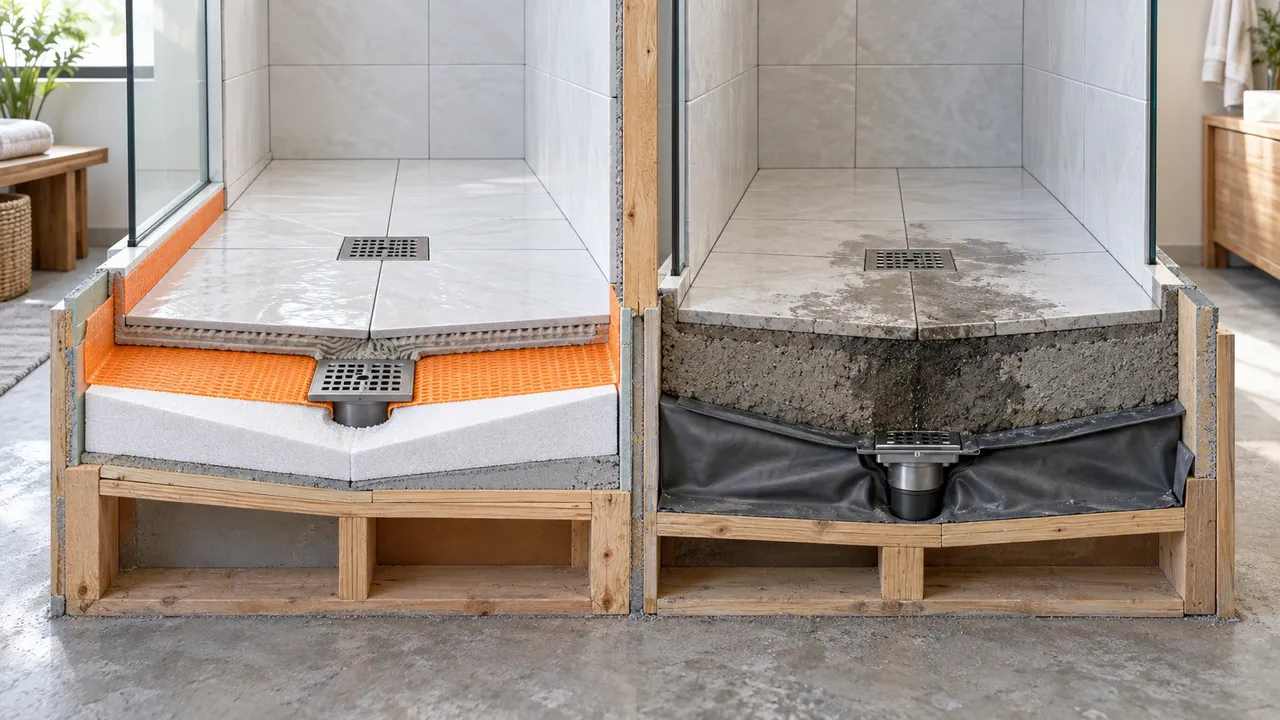
Foam Shower Pans vs. Traditional Mortar Beds: Which Is Better?
When remodeling a shower, one of the most important decisions is what goes underneath the tile. The shower pan and waterproofing system determine how well the shower drains, how long it lasts, and whether trapped moisture becomes a future problem.
Two common options are a prefabricated foam shower pan—such as the Schluter®-KERDI-SHOWER system—and a traditional cement mortar bed. Both methods can work when installed correctly, but they manage moisture differently.
Tile and Grout Are Not Waterproof
Many homeowners assume that tile and grout keep all water out of the shower floor. Tile may resist water, but grout joints and other areas can allow moisture to pass through.
That is why every tiled shower needs a complete waterproofing and drainage system underneath the finished surface. Without proper waterproofing, slope, drainage, and ventilation, moisture can become trapped below the tile.
What Is a Schluter Foam Shower Pan?
A Schluter shower pan is a lightweight, prefabricated foam tray designed with a consistent slope toward the drain. The tray can be trimmed to fit many shower dimensions and is installed over a properly prepared, flat, and level subfloor.
The foam tray works as part of a complete shower system that generally includes:
A sloped foam shower tray
A compatible bonding-flange drain
A waterproofing membrane over the tray and walls
Waterproof seam tape and prefabricated corners
Seals for plumbing penetrations
A compatible thin-set mortar and tile installation
The foam tray provides the shape and slope, while the bonded waterproofing membrane is the layer that stops water.
How the Waterproofing Membrane Works
The Schluter-KERDI membrane is installed directly behind the tile. It covers the shower floor and walls, while seams, corners, and plumbing penetrations are carefully sealed.
Because the waterproofing is immediately beneath the tile, water has very little space to travel or collect inside the shower assembly. Moisture that reaches the membrane is directed toward the drain instead of being allowed to soak deeply into a thick cement bed.
The membrane, drain connection, seams, corners, curb, and penetrations must all be installed correctly. One poorly sealed area can compromise an otherwise well-built shower.
What Is a Traditional Mortar-Bed Shower Pan?
A traditional shower pan is formed by hand using a mixture of sand and cement. The installer shapes the mortar to create a slope toward the drain.
In a conventional system, a waterproof liner is placed below the upper mortar bed and connected to a clamping-style drain. Water that passes through the tile and mortar is supposed to reach the liner and flow toward drain weep holes.
A correctly constructed traditional shower normally requires:
A preslope underneath the waterproof liner
A properly installed liner
Correctly treated corners and curb areas
A compatible clamping drain
Open and protected drain weep holes
A properly sloped upper mortar bed
Traditional mortar showers can last for many years. Problems often develop when the liner is installed flat, the weep holes become blocked, the drain connection fails, or other waterproofing details are missed.
What We Have Found During Older Shower Remodels
On remodeling projects, we have removed tile from older showers and found mold growth beneath the tile and within damp mortar beds. In some cases, the mortar remained saturated and the bathroom had a persistent mildew smell.
This can happen because moisture penetrates the tile and grout and enters the cement mortar bed. In a properly built traditional system, that moisture should travel down the preslope and escape through the drain’s weep holes.
However, if there is no preslope, the weep holes are clogged, or the liner and drain were installed incorrectly, water may collect in the mortar. A continuously damp shower assembly can create conditions that support mold and mildew growth and produce unpleasant odors.
The problem is not necessarily the mortar itself. It is often the result of trapped moisture, incorrect construction, damaged waterproofing, or poor ventilation.
Advantages of a Schluter-Style Foam Shower Pan
Consistent slope: The tray is manufactured with a slope toward the drain, reducing the amount of shaping required on site.
Surface waterproofing: The membrane is directly underneath the tile, so less water enters the deeper shower assembly.
Lightweight: Foam trays add less weight than thick mortar beds.
Faster installation: A prefabricated tray can reduce labor and installation time.
Integrated system: The tray, membrane, drain, corners, and seam materials are designed to work together.
Good for many remodels: The system is especially useful when reducing installation weight and drying time is important.
Disadvantages of a Schluter-Style Foam Shower Pan
Higher material cost: The complete system may cost more than the raw materials used for a traditional mortar pan.
Requires a flat, level subfloor: An uneven base can prevent the tray from being properly supported.
Drain placement matters: Existing plumbing may need to be moved to match the selected tray.
Less flexible for unusual layouts: A custom mortar bed may be easier for irregularly shaped showers or unusual drain locations.
Careful installation is essential: Seams, corners, penetrations, and drain connections must be sealed according to the manufacturer’s instructions.
The foam can be damaged before tiling: Installers must protect the tray from dents and concentrated loads during construction.
Advantages of a Traditional Mortar Bed
Fully customizable: Mortar can be shaped for almost any shower size, drain location, or floor plan.
Strong and durable: A properly installed mortar bed provides a solid tile base.
Lower raw-material cost: Sand and cement are generally less expensive than a complete prefabricated shower system.
Useful for complex showers: It works well for oversized, curved, or irregular shower floors.
Proven method: Skilled tile installers have successfully used mortar beds for generations.
Disadvantages of a Traditional Mortar Bed
More labor-intensive: Mixing, placing, shaping, and curing mortar requires time and experience.
Heavier: A thick mortar bed adds considerably more weight to the floor.
Installer-dependent slope: The slope is created by hand, so the finished quality depends heavily on the installer.
Traditional beds absorb moisture: In a liner-based system, some water can enter the upper mortar bed before reaching the drainage layer.
Drainage failures can trap water: Missing preslope or clogged weep holes may leave the mortar continuously damp.
Repairs can be difficult: Diagnosing and repairing a failed liner often requires complete shower-floor demolition.
Can a Mortar Bed Use Surface Waterproofing?
Yes. Homeowners do not always have to choose between a foam tray and an old-style liner system.
A custom mortar bed can be shaped by hand and then covered with a bonded waterproofing membrane directly below the tile. This method combines the flexibility of a custom mortar pan with the moisture-control benefits of surface waterproofing.
It can be an excellent choice for unusually shaped showers, provided the membrane and compatible drain are installed as a complete system.
Which Shower Pan Is Better?
For many standard bathroom remodels, we prefer a foam shower tray with a bonded waterproofing membrane because it offers a predictable slope, lower weight, and waterproofing directly underneath the tile.
A custom mortar bed may be the better option for an irregular shower, unusual drain placement, or a floor that cannot accommodate a standard foam tray. When using mortar, surface-applied waterproofing can help reduce the amount of moisture absorbed into the shower base.
The quality of the installation matters more than the brand name alone. Proper subfloor preparation, slope, drain installation, waterproof seams, curb details, and a successful flood test are all essential.
Plan a Shower That Stays Dry and Fresh
If your shower has a persistent mildew smell, loose tile, cracked grout, discoloration, or signs of moisture damage, the problem may be underneath the finished surface. Covering it with new grout or caulk will not repair a failed shower pan.
Portland Metro Construction & Remodeling can inspect your existing shower and help you select the appropriate pan and waterproofing system for your bathroom. Our goal is to build a shower that looks great while managing water correctly behind the tile.
Contact Portland Metro Construction & Remodeling to schedule a bathroom-remodeling consultation.